
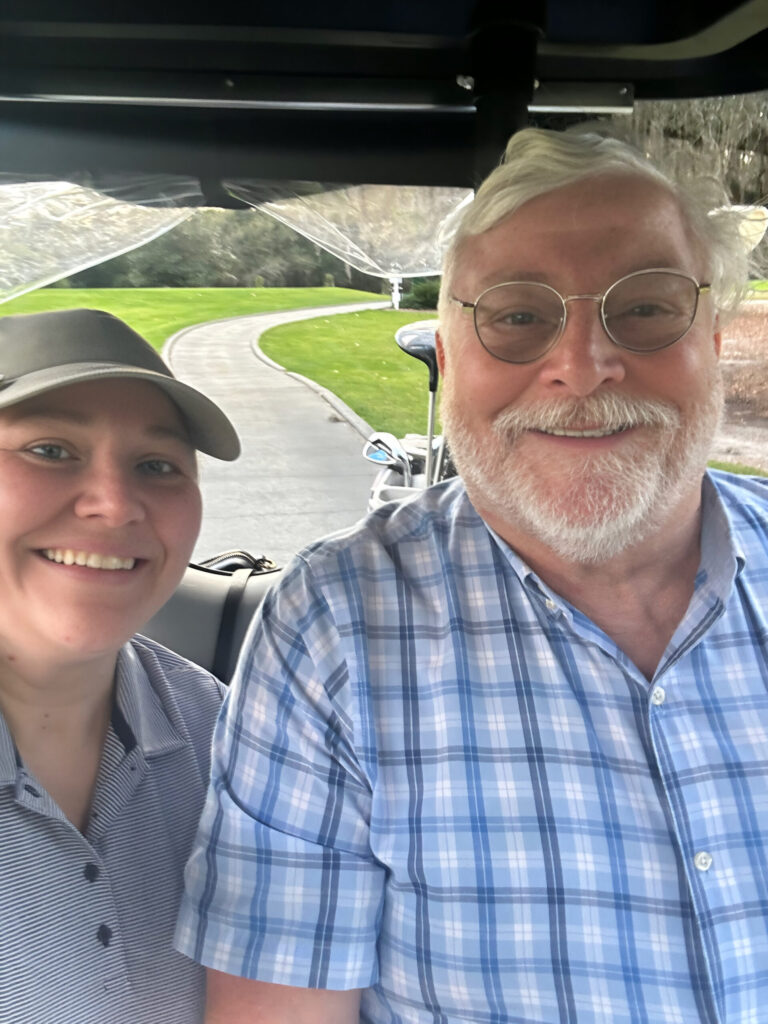
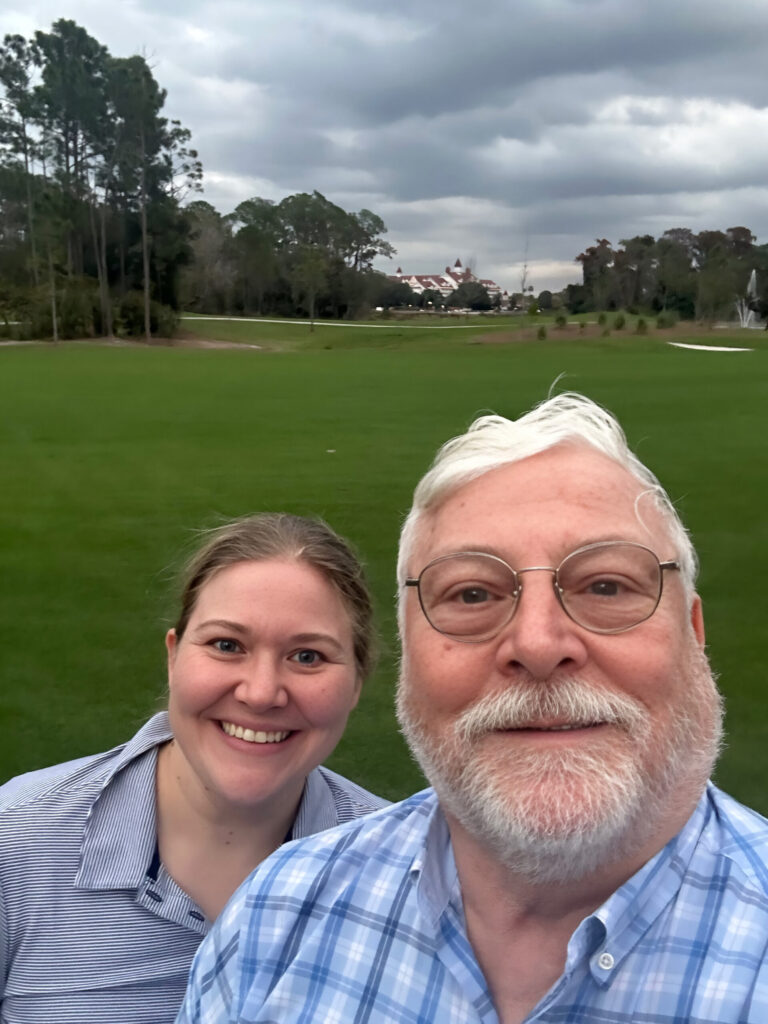
When my family went to Disney World in January, we had park passes and an early afternoon arrival for the first day. Options included: Guardians of the Galaxy. Cocktails around the World. Single Rider line for Rise of the Resistance. The pool. OR. The golf course next door. Obviously I made a tee time from baggage claim.
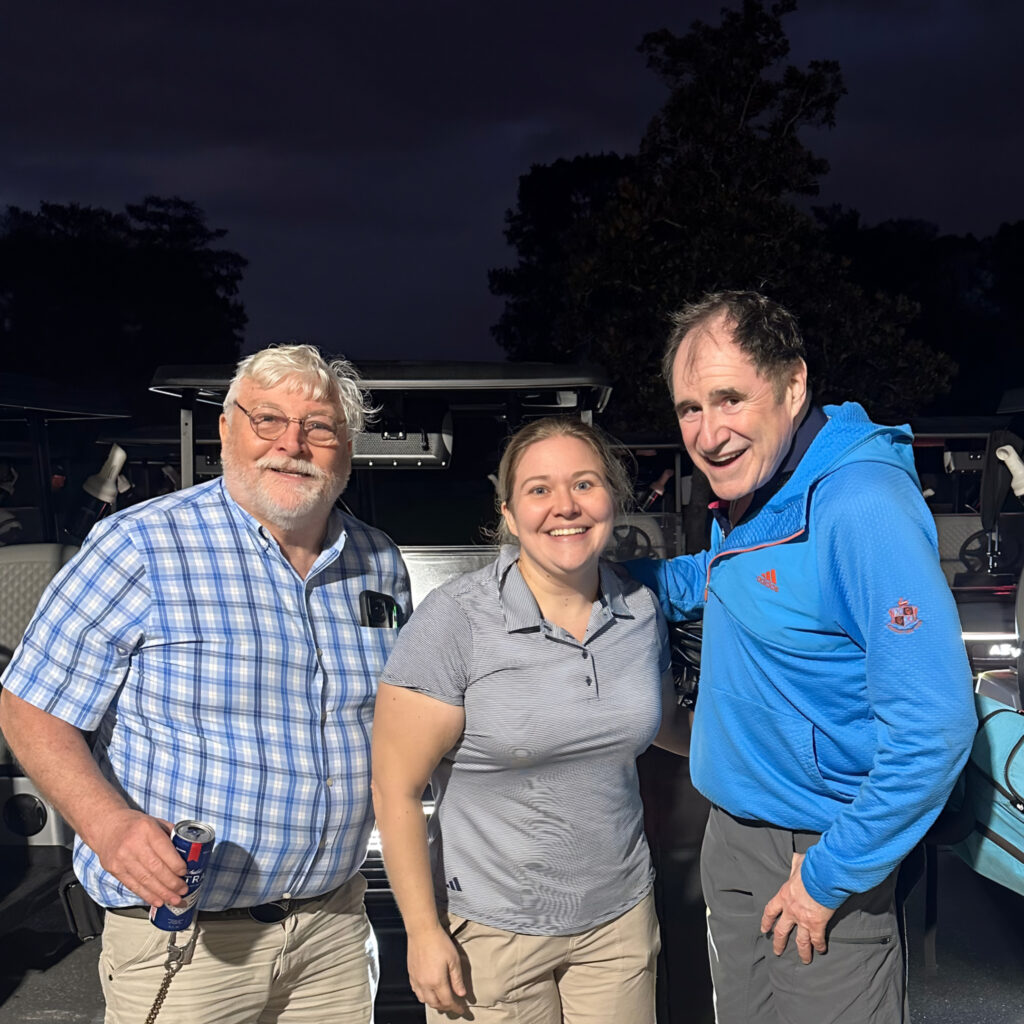
My dad came along for the ride—he doesn’t really play anymore but there’s no age limit on the appeal of driving a golf cart. He went to the bar while I warmed up, loaded a six-pack into the cooler, and spent most of the round playing Pokemon GO on his phone while I played 15 holes in the January Florida dusk. Didn’t know the course. Hadn’t touched a simulator in six weeks. Took a few mulligans—this isn’t a scorecard I’m submitting anywhere. But I was swinging freely, not thinking about anything, just playing golf, and I was 72 through 15 holes when it got too dark to finish.
Here’s what was different: I wasn’t surprised. A year ago I would have been. But somewhere on hole 6, after I talked myself into the 7-wood from 150 — too short with the 5, too long for anything else — and it stuck the green instead of the Mickey Mouse sand bunker, I realized the season had actually stuck too. For the record: a Mickey-shaped bunker is the most consolation golf has ever offered me for a bad lie. I didn’t need it this time.
When I came back to golf last season, I genuinely expected to be a beginner. Twenty years away, clubs off Facebook Marketplace, first rounds shooting 120s — I figured I’d be relearning everything from scratch. And in some ways I was. But the muscle memory for golf was much more like riding a bike than re-learning violin was. More came back than I expected. The approach did the rest.
This is, apparently, the ADHD superpower I have to make sure I don’t use for evil. French, violin, robotics, pie baking, perennial gardening, knitting, learning Python to automate a content management system, Disney trip planning — when something catches, it catches, and I have to understand it completely. Golf caught again. So I did what I always do: I built a system.
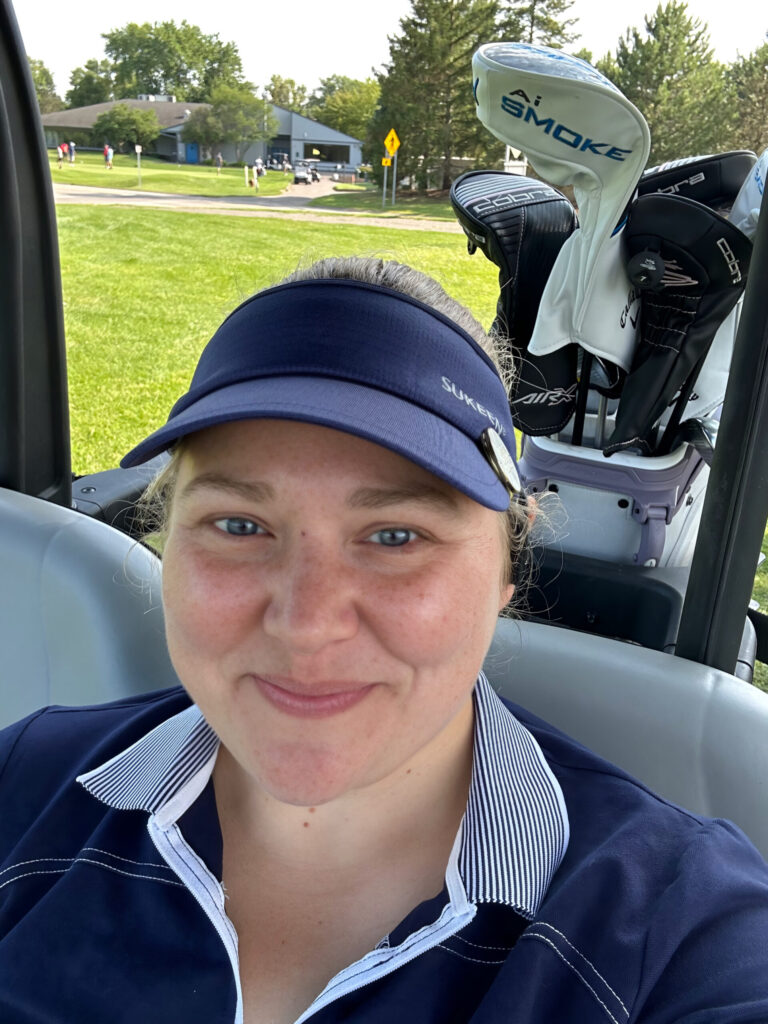
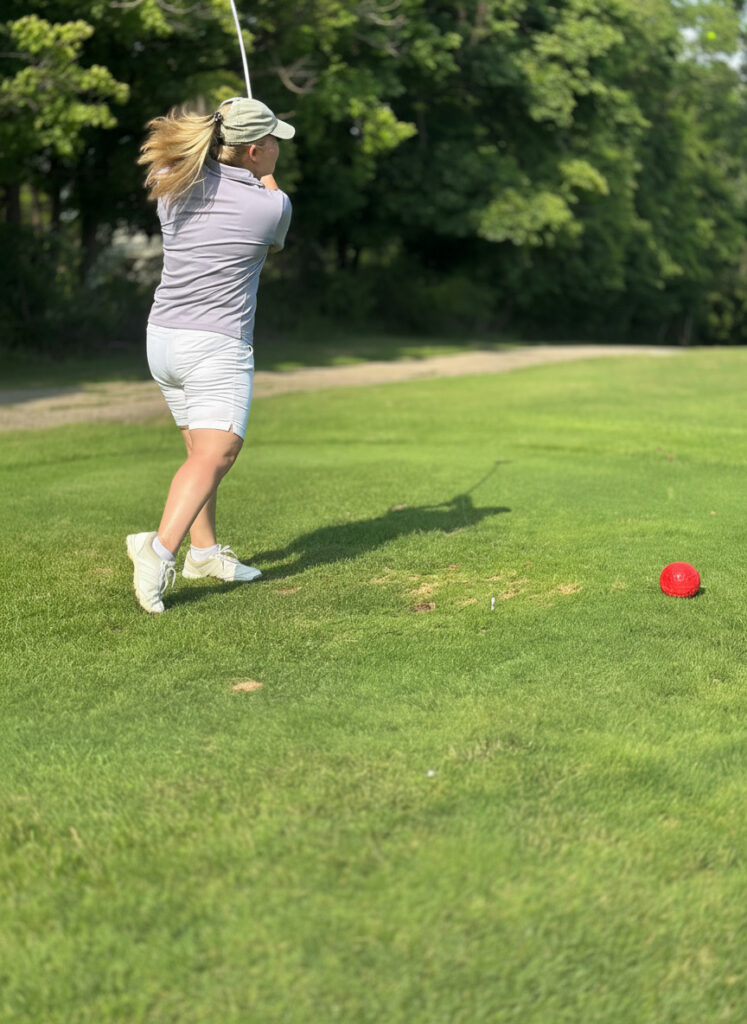
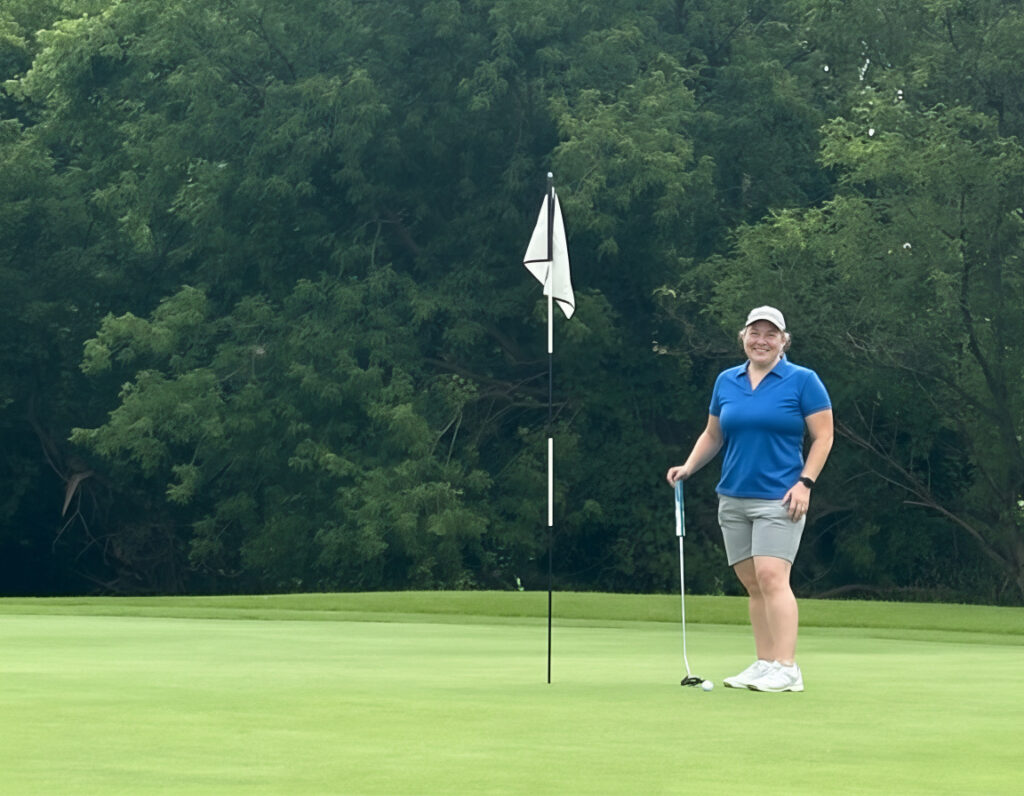
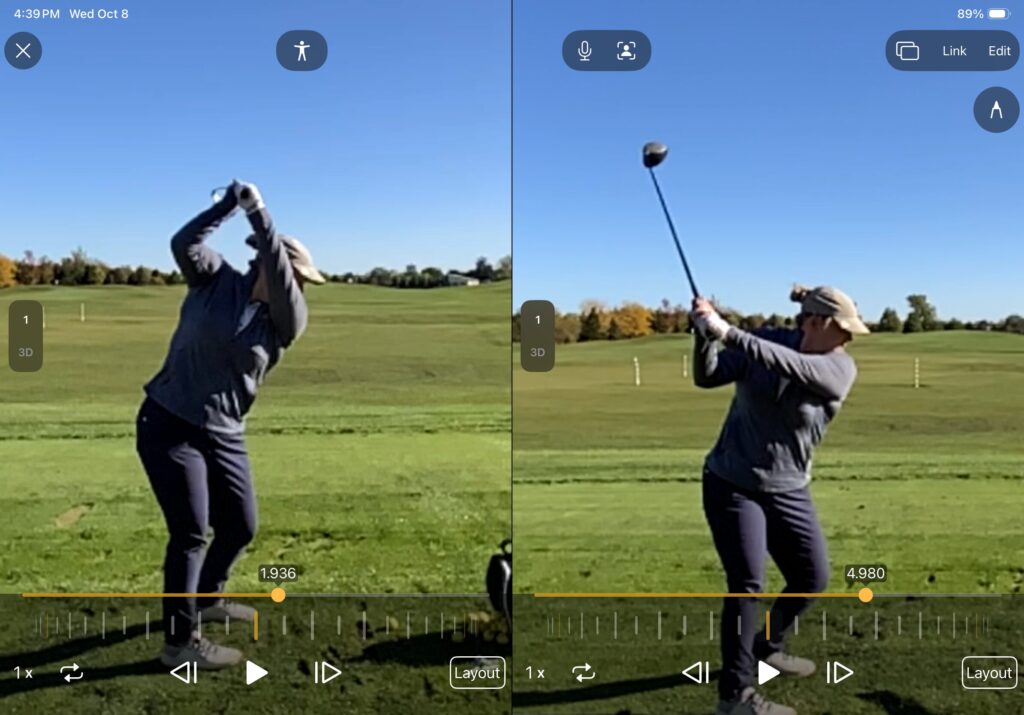
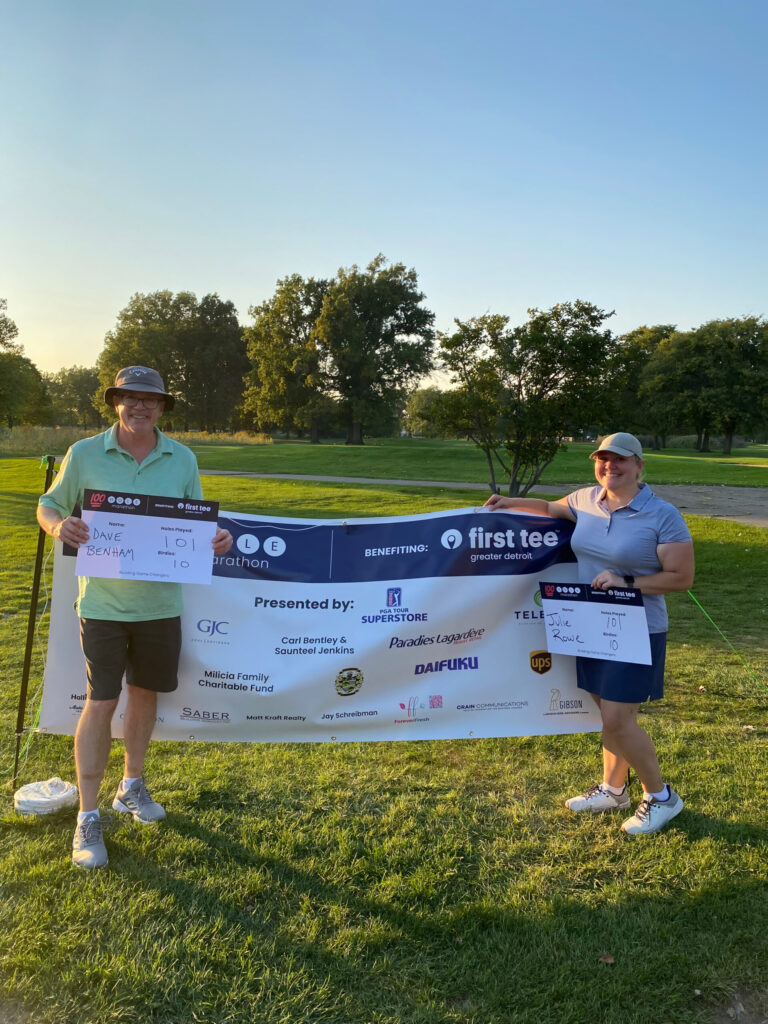
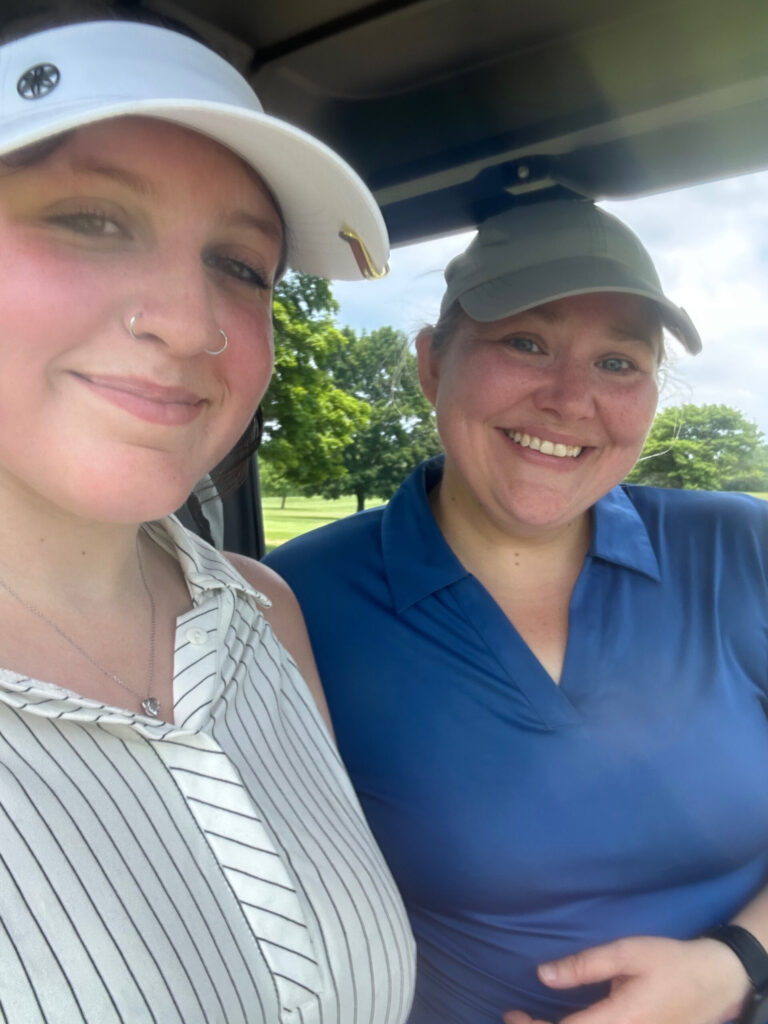
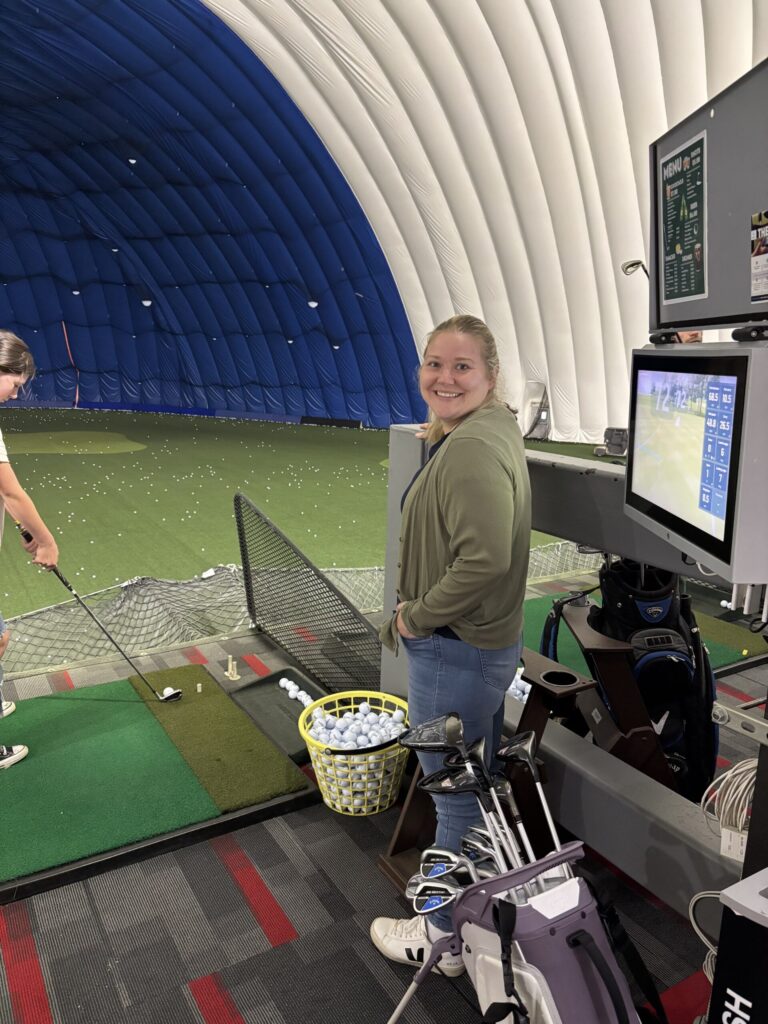
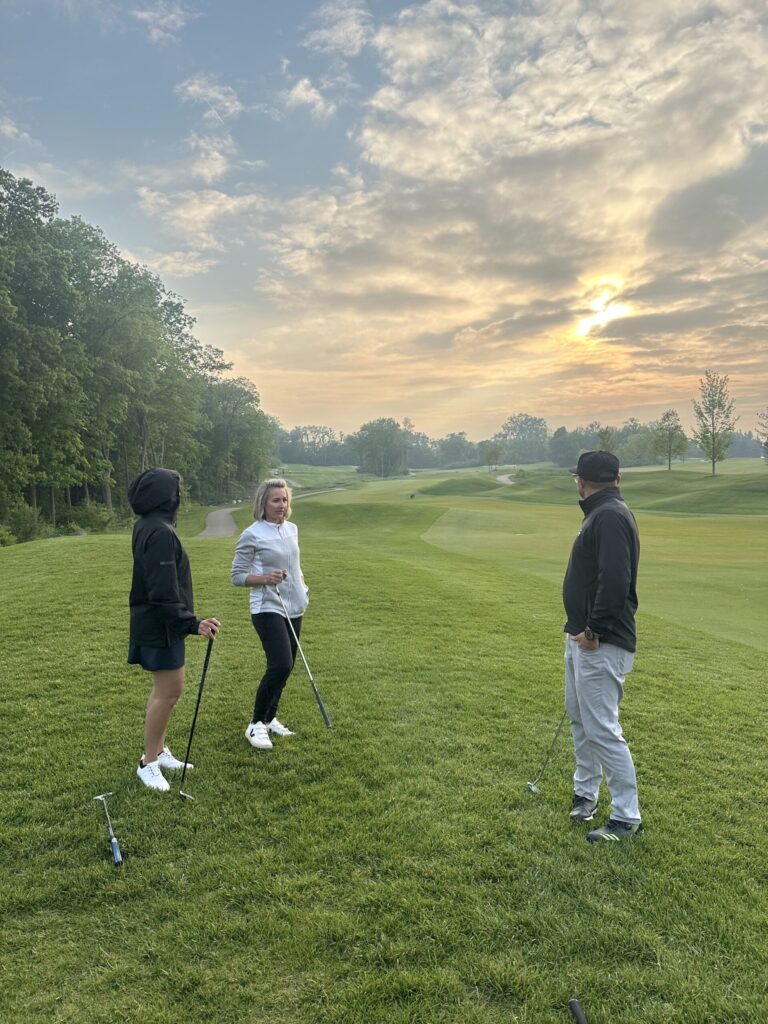
When I was on the golf team in high school, I just showed up to practice and my coach told me what to do. I worked hard. I didn’t have to think. This time I had to build the structure myself, and it turns out I kind of love doing that.
By mid-season I was breaking 90. The season ended with a 92 average and an 84 at Fellows Creek that I’m still proud of. But the number that actually tells the story is the penalty rate — it dropped to match a 10-handicap benchmark, which sounds like a swing stat but isn’t. It means I stopped playing golf swing and started playing golf. The strategy. The attempts. Knowing when to lay up and when to go for it and being right more often than not. My contact got clean, the slice got addressed, I started hitting draws — but that stuff is almost secondary to the fact that I started thinking on the course. And somewhere in there I started knowing how I hit a shot before I watched it fly. That’s feel. Feel takes time to build. I built it.
I started coaching with First Tee last season, took my Level 1 certification, and spent time watching kids fall in love with the process of getting better at the game. That’s a specific thing to fall in love with — not the game itself, but the small improvement wins along the way. Watching them find it made me realize I’d found it too.
Here’s the thing about the first time I played golf: I was good, and I didn’t fit in very well, and eventually the second thing won. I left the game when I left high school and didn’t look back for twenty years. Coming back on my own terms, building my own system, answering to nobody — that’s a different relationship with the game entirely.
What’s Different Now
So I’m not trying to figure out if I can golf anymore. That question is closed. What’s open now is how far this actually goes.
My ball-striking is already ahead of where my handicap says I should be. The gap between hitting it well and scoring well lives almost entirely inside 100 yards — short game, putting, the unglamorous stuff where real scoring lives. That’s where this season’s work is going. I have a new putter, fitted specifically to my stroke. More on that soon.
Last year I told people my goal was breaking 100. I was actually trying to break 90 and too afraid of being embarrassingly wrong to say so out loud. This year I’m done with that. The goal is a low 80s average and at least one round under 80 before the season ends. The work is already underway. That’s the fun part.
What Comes Now
Today’s second post lays out what this season actually looks like — the data that shaped it, how the practice time is structured, and what October is building toward.
The plan exists. It’s more ambitious than last year’s, which I think is the right direction. Now it gets tested.