
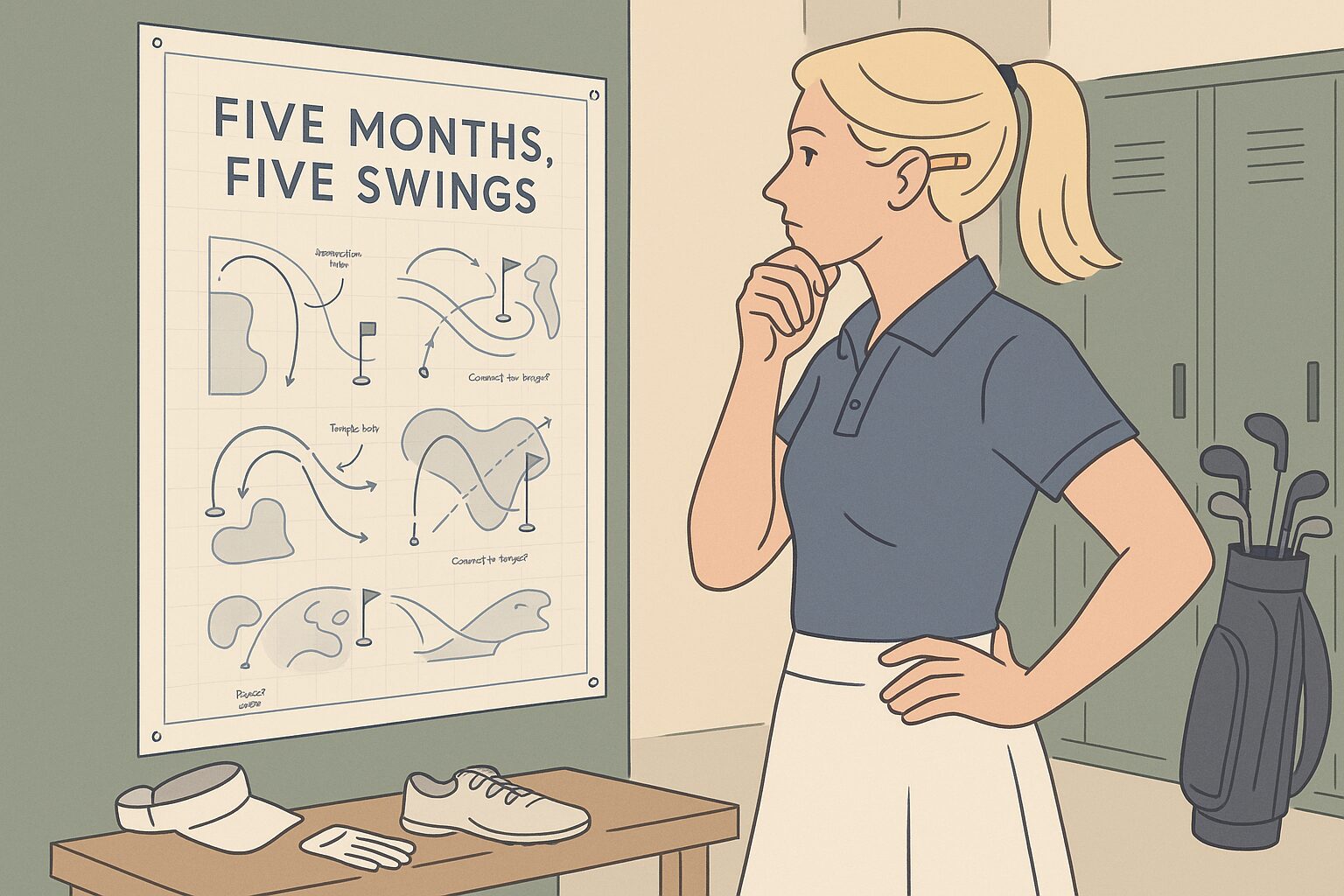
Structure, progress, and a few full-swing crises along the way to creating a golf season training plan.
Rebuilding a Game I Thought I’d Left Behind
I didn’t expect to get back into golf. But a few months ago, while watching PGA Tour coverage on the couch with my boyfriend (equal parts annoyed and intrigued), I realized I missed it. I remembered the way the game made me think, the way a single good shot could linger for weeks, and the way high school varsity tournaments gave me that weird mix of nerves and joy.
That night, I checked Facebook Marketplace.
Two days later, I had a full set of used beginner-friendly clubs. Three days after that, I was at the range. And from that first swing, I knew: If I was going to get serious about this game again, I needed to be just as serious about how I practiced. So I started working on a golf season training plan.
Setting the Goals That Mattered
My first coaching session came fast. I didn’t want to show up cold, so I did what I always do when I care about something: I made a plan.
At first, my goals were simple: enjoy myself, find a rhythm, and shake off the rust. But golf has a way of clarifying what you actually need to work on. The more I practiced, the more I realized how unhelpful “just have fun” could be if I didn’t have specific goals to ground my expectations.
So I started narrowing them down:
- Long-term: Break 90 this season.
- Mid-range: Feel confident playing a full 18 holes.
- Short-term: String together complete holes—from tee to green—without disaster.
- Micro-goals: Get out of the sand in one. Make solid contact on my first chip. Stop decelerating mid-swing. Et cetera.
Some of these were performance-based. Others were confidence-based. All of them helped me start practicing with purpose—and logging my progress in a way that told a fuller story than the scorecard.
Why I Built (Then Rebuilt) a Golf Practice Blueprint
When I built my original four-month plan, it was meant to give me structure without locking me in. I wanted guidance, not rigidity—something that pushed me to improve while leaving space for reflection.
And it worked. But only to a point.
That first month taught me a lot—not just about where my game stood, but about how many variables go into every swing:
- One centimeter difference in ball position? Totally different shot.
- A slightly open shoulder at address? Cue the push-fade parade.
- Trying to fix tempo without knowing what tempo feels like? Good luck.
Improvement wasn’t going to come from charging ahead through a checklist of skills. I needed more time. More space. And a framework that acknowledged what I knew now: This game requires patience, strategy, and adaptability.
So I rebuilt the plan. Not from scratch, but from a more informed place. Welcome to the Five Swings.
Why a Par 5?
Because five months. Sure. But also: because par 5s are the most intimidating holes on the course—and the most rewarding.
They demand more than one good shot. They demand course management, smart choices, recovery skills, and some luck with the bounce. Pulling together a complete par 5 means everything has to click… and that’s rare. But when it happens? Magic.
That’s kind of the point of this plan. I might not break 90 this season. But if I can start stringing together complete holes—holes where every shot has a purpose—I’ll know I’m on the right track.
Breaking 90 would be gratifying. But building a complete hole—start to finish—feels like real progress.
The Five Swings: Monthly Themes & Weekly Focus
Each “Swing” represents one month in my plan. It’s a phase, a focus, and a chance to course-correct without starting over.
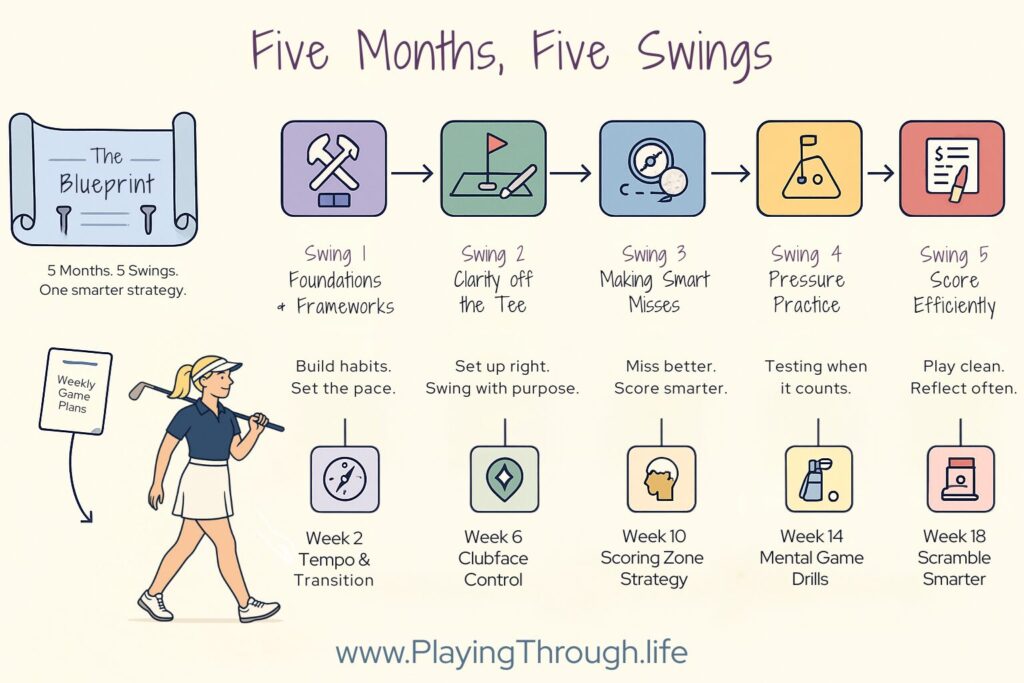
🗓️ The Game Plan: Month-by-Month, Week-by-Week
I mapped out the season around five key swings—each one building toward a better game. Here’s how I’m breaking it down week by week to stay focused, steady, and just a little smarter with every round.

Blueprint vs. Game Plan: What’s the Difference?
The Five Swings is my blueprint—the big picture view of how I’ll improve this season.
But the Weekly Game Plan is where that gets real. That’s where I take the theme and turn it into actual drills, shot tracking, focus areas, and course play goals.
Here’s how I think of it:
The blueprint sets the direction. The Weekly Game Plan gets you there—one session, one swing, one strategy at a time.
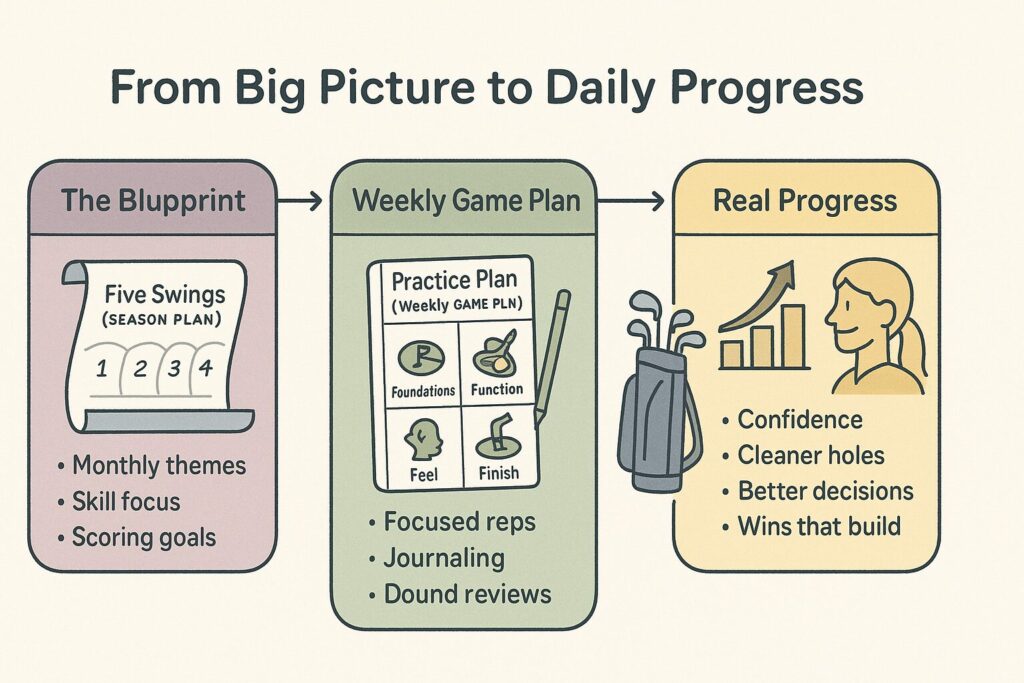
Check out how I use the blueprint and set up my weekly game plan each week: Weekly Game Plan Placeholder.
Final Thoughts
I’m not chasing perfection. I’m chasing repeatable progress.
And now I have a framework that helps me do that—without overthinking every swing, or beating myself up every time I land in a bunker.
As Lee Trevino once said when asked what the most important shot in golf is:
“The next one.”
That’s what this plan is really about.
One focused goal.
One week.
One swing.
At a time.